 For Coloring Pages
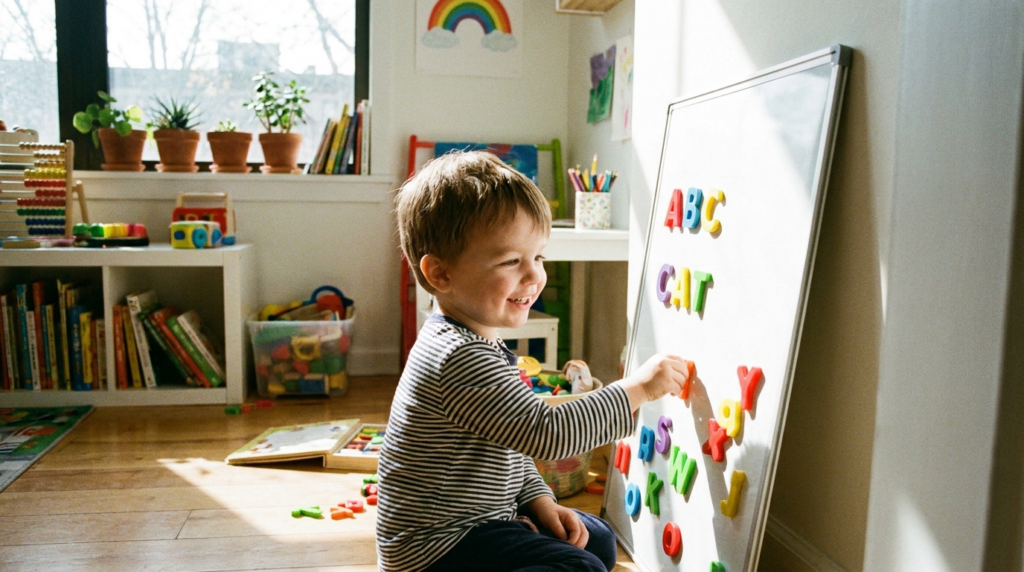
Learning letters isn’t about “drilling” the alphabet – it’s play in which a child gets familiar with the shape and sound of letters. It starts much earlier than we think – with recognising the first letter of their name. Below: where to start, which games work best and in what order to introduce letters – for parents and teachers.
Contents
- When to start learning letters
- In what order to introduce letters
- Games that teach letters
- The most common mistakes
- Frequently asked questions
Key points
- Sound, not name: teach “mmm” as in “mum”, not “em” – it makes reading easier later.
- Start with their name: the first letter of the child’s name is the easiest beginning.
- Use all the senses: letters made of sand, dough and blocks are remembered better than those on paper.
When to start learning letters
There’s no single age – readiness matters, not the date of birth. Most children become interested in letters between 3 and 5, first recognising letters from their own name and from signs. Don’t rush it: if your child asks “what letter is that?”, that’s the best signal to start. Keep the play short and enjoyable, with no classroom atmosphere.
In what order to introduce letters
Not from A to Z. Start with the letters the child hears and sees most: the letters of their name, then easy, common sounds like s, a, t, p, i, n and m, which quickly let them build simple words (sat, pin, map). Short vowel sounds are easy to say and give the child a quick sense of success. Leave letters that are trickier to write or sound out – and digraphs like sh, ch and th – until later.
Games that teach letters
- Letter of the day: pick one letter and look for it around the house, on a walk, in a book.
- Letters from bodies and objects: make a letter with string, sticks or your bodies.
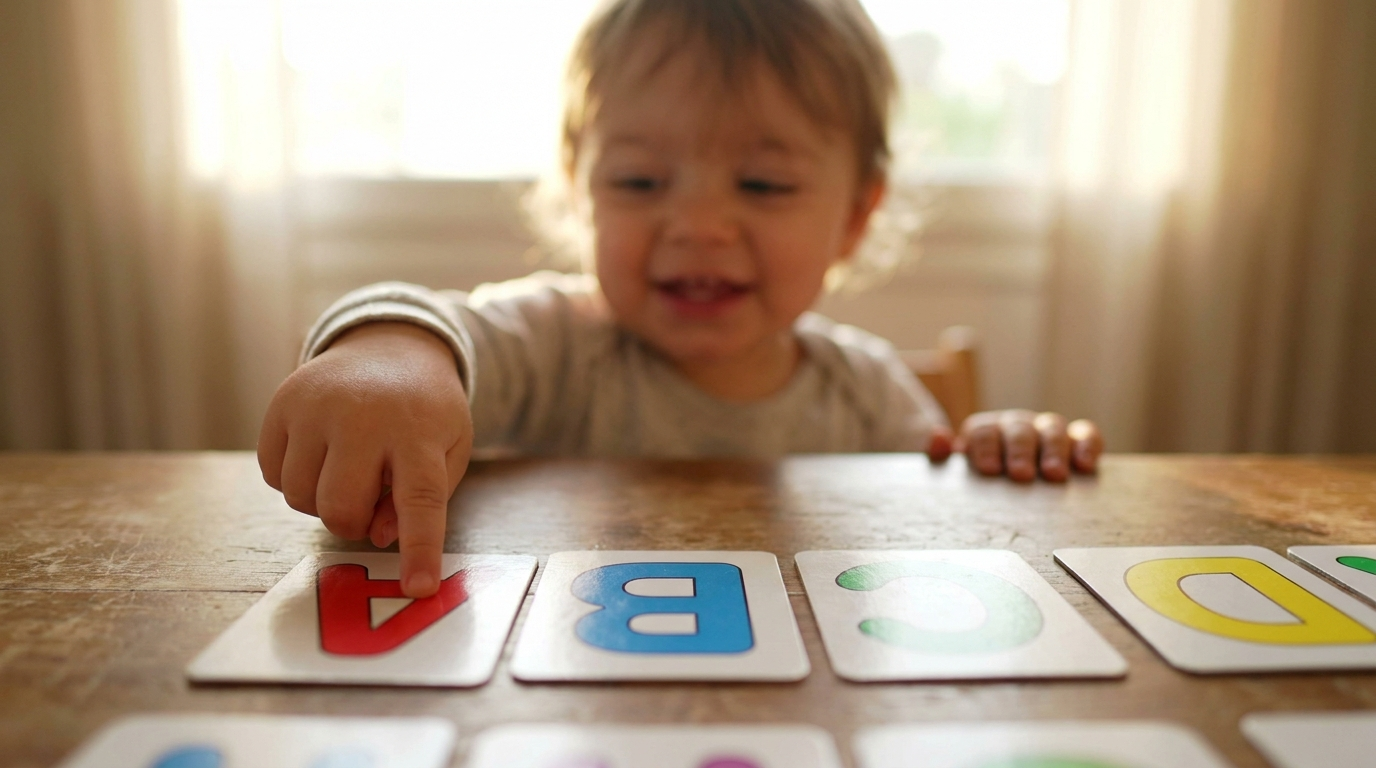
- Tracing: following the outline of a letter teaches its shape and the hand movement.
- Sound hunt: “what starts with sss?” – recognising a sound by ear.
You’ll find printable letter cards to trace and color in our letter tracing worksheets – they combine learning a letter’s shape with hand practice.
The most common mistakes
The most common one is teaching letter “names” instead of their sounds – the child knows “bee, see, dee” but then can’t blend a word. The second mistake is rushing and comparing with other children. The third: too much at once. One letter learned well is better than five “half-learned” ones. Always end the game on a success and a positive feeling.
Frequently asked questions
Should I teach uppercase or lowercase letters?
Many parents start with capital letters because they are simpler to draw, but lowercase letters are what children see most in books, so introduce them early too – especially the letters of their name.
My child mixes up similar letters – what should I do?
Mixing up b/d/p or m/n is normal at the start. Using several senses helps: touching, building and tracing a letter with a finger fixes its shape and direction.
How much time a day for learning letters?
A few minutes, ideally woven into everyday life (a walk, the kitchen, a book). Short and often works better than long, forced “lessons”.
Summary
Teach your child letters through sounds and play: start with their name, begin with easy sounds, involve the senses and don’t rush. A few minutes a day in everyday situations achieve more than rigid lessons. Download letter cards from our printable letter tracing worksheets.