 For Coloring Pages
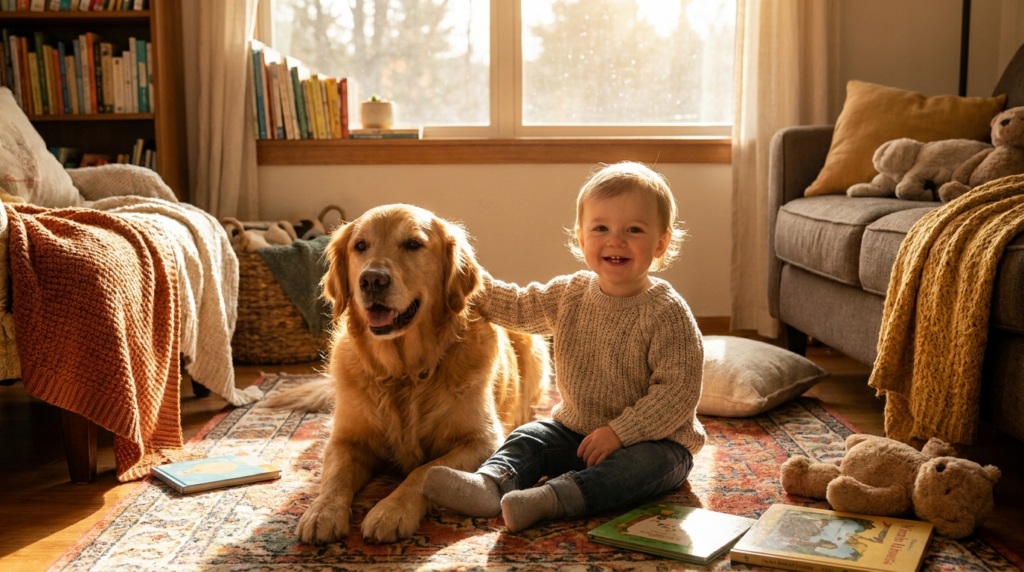
The best dog breeds for children are gentle, patient and predictable ones – the Labrador, Golden Retriever, Cavalier King Charles Spaniel, Poodle or Beagle. But more important than the breed itself is matching the dog’s temperament to the child’s age, the family’s lifestyle and the time you can realistically give to training and walks.
Key points
- A good family dog is gentle, patient and tolerant of noise and children’s games.
- For a small flat, a smaller, calm breed is better (Cavalier, Pug, French Bulldog); for an active family, retrievers are a great fit.
- Breed is no guarantee – a dog’s behaviour depends on socialisation, training and whether the child learns to respect the animal.
- Never leave a young child alone with a dog without an adult watching.
What makes a good dog breed for kids?
A good family dog combines four qualities: a gentle temperament, patience, the right size and predictability. You want a dog that copes with running, noise and clumsy stroking without fear or aggression. Breeds developed over generations as companions – retrieving gundogs and small companion dogs – tend to have exactly these traits.
- Temperament – calm and friendly, not fearful or prone to guarding territory.
- Patience – tolerance of sudden movements, loud games and touch.
- Size that suits your home – a big dog needs space and exercise; a very small one can be fragile around a toddler.
- Energy level – match it to your own. A working dog you can’t tire out will get frustrated and misbehave.
Breed profiles are published by kennel organisations such as the international federation FCI and national kennel clubs. Treat them as a starting point – every individual dog has its own personality.
The best dog breeds for kids – comparison
The breeds below are most often recommended to families with children because of their gentleness and sociability. The table will help you match a dog to your child’s age and your home. For every breed, the breeding line and upbringing matter, so treat this as a guide, not a strict rule.
| Breed | Size | Temperament | Best for |
|---|---|---|---|
| Labrador Retriever | large | gentle, energetic, patient | from preschool age; active families |
| Golden Retriever | large | very gentle, calm | from preschool age; the classic family dog |
| Beagle | medium | cheerful, sociable, stubborn | school-age children |
| Cavalier King Charles Spaniel | small | affectionate, calm, good in a flat | younger children too |
| Poodle (miniature/medium) | small–medium | clever, loving, sheds little | good with allergies; any age |
| French Bulldog | small | calm, devoted | flats; careful in hot weather |
| Pug | small | cheerful, a couch potato | calmer children; careful in hot weather |
| Boxer | large | devoted, robust, patient | school-age children; active families |
Labrador and Golden Retriever – classics for a reason
Retrievers have been bred for generations as retrieving and companion dogs, which is why they are gentle and eager to cooperate. They cope with family chaos and learn quickly. But they have plenty of energy – without daily walks and play they can get bored. Goldens also need regular brushing of their thick coat.
Beagle – an energetic companion for older kids
The Beagle is a cheerful, hardy dog made for playing with school-age children. It has a strong sense of smell and can be stubborn, so letting it off the lead needs care. It doesn’t like being alone and can be noisy – it’s happiest where there’s lots going on.
Small dog breeds for kids
A small breed is a good choice for a flat and for a family that doesn’t run miles every day. The gentlest small family dogs are the Cavalier King Charles Spaniel, Miniature Poodle, French Bulldog, Pug, Bichon Frisé and Maltese. Remember – the smaller the dog, the easier it is to hurt it during rough play, so teach your child to be gentle.
- Cavalier King Charles Spaniel – exceptionally affectionate and calm; prone to heart disease, so choose a health-tested breeder.
- Miniature Poodle – intelligent, hardly sheds, easy to train; often recommended for families with allergies.
- French Bulldog and Pug – calm lap dogs. They are flat-faced breeds, so they cope badly with heat and exertion – don’t push them in summer.
- Bichon Frisé and Maltese – small, cheerful and low-shedding; they need regular grooming.
Be careful with the word “hypoallergenic”. No dog is completely safe for someone with allergies, but low-shedding breeds (Poodle, Bichon, Maltese) spread less hair and dander. Before deciding, spend some time with such a dog and see how your child reacts.
What to watch out for – and which jobs a child can take on
A dog in a home with children is a lesson in responsibility, but above all a commitment for the adults. The parent is responsible for the dog – the child helps as their age allows. Before deciding, count the real costs and time: food, vaccinations, vet visits and, above all, daily walks for well over a decade.
- Preschooler – fills the water and food bowl with an adult watching, helps with brushing.
- School-age child – goes on short walks with a parent, learns commands, tidies up after play.
- Teenager – can walk the dog alone and keep track of feeding.
Teach your child a few golden rules: don’t disturb the dog while it eats or sleeps, don’t take its toys by force and never pull its ears or tail. A dog that has its own quiet corner is less likely to react nervously. And is every breed right for a toddler? No – more on that below.
Which dogs are better avoided with a young child?
With a young child, be cautious with guarding and protection breeds and very high-energy working dogs, especially if it’s your first dog. It’s not that they are “bad” – they need experience, consistency and a lot of exercise, which families with little ones often lack.
- Guarding and protection breeds (e.g. Cane Corso, Caucasian Shepherd) – strong, wary of strangers, for experienced owners.
- Extremely high-energy dogs (e.g. Husky, Border Collie) – brilliant, but they need work and sport; bored, they cause trouble.
- Very tiny dogs (e.g. Chihuahua) – easy to hurt during rough play, so with a toddler they can be risky for both sides.
Thinking of a rescue dog? That’s a great idea – ask the shelter for a dog that has already been tested with children. An adult dog with a known, calm character is often a safer choice than a surprise puppy.
Before a real dog arrives – explore the topic together
Choosing a dog is a decision for well over ten years, so give your child time to get used to the idea. Reading about dogs together, looking at breeds and doing some art build gentleness and interest in animals. Our free printable dog coloring pages work great here – by coloring different breeds, a child gets to know them before a dog moves in.
Printable coloring pages – Dogs
Below are three free coloring pages from this category. Click a picture to open the coloring page and download it for printing.


Frequently asked questions
Which dog is best for a young child?
For a young child, the best dog is gentle, patient and calm – for example a Golden Retriever, a Labrador or a Cavalier King Charles Spaniel. The key, though, is adult supervision and good socialisation, because even the calmest breed should never be left alone with a toddler.
What is the calmest family dog breed?
The Golden Retriever, Cavalier King Charles Spaniel and Pug are considered some of the calmest family breeds. They are gentle and rarely aggressive. A dog’s calmness also depends on training, exercise and whether it feels safe at home.
Which small dog is good for a child in a flat?
The Cavalier King Charles Spaniel, Miniature Poodle, French Bulldog and Bichon Frisé suit a flat with children well. They are small, friendly dogs that are happy with gentler walks. Remember that a small dog is easy to hurt, so teach your child to handle it gently.
At what age should a child get a dog?
Many experts suggest waiting until the child is around five or six and understands the rules of being around animals. It isn’t a strict rule – a dog can work with a younger child too, as long as an adult takes full charge of care and supervision.
Does a dog teach a child responsibility?
Yes – caring for a dog teaches a child routine, empathy and looking after others. Give age-appropriate jobs: filling the bowl, brushing or walks with a parent. Responsibility for the dog’s health and safety, however, always stays with the adults.