 For Coloring Pages
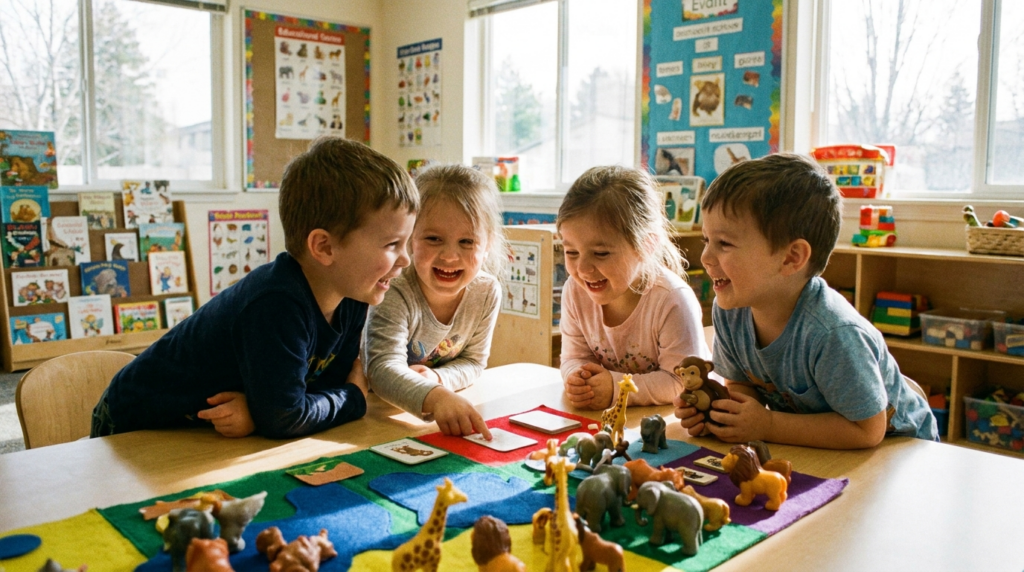
Animals are one of preschoolers’ favourite topics – and great material for learning. Through animal games, children learn names, sounds and habitats and build their vocabulary almost without noticing. Below is a ready-made set of animal activities for home and the classroom, organised by what they teach.
Contents
- What do animal games teach?
- Ready-made animal games
- How to match them to age
- How to use them in class
- Frequently asked questions
Key points
- Multi-purpose: one animal game teaches names, sounds, sorting and speech.
- Movement and sound: imitating animals involves the whole body and helps knowledge stick.
- From familiar to new: start with pets, then wild and exotic animals.
What do animal games teach?
It’s not just names. A child learns to classify (pets/wild, big/small), to link an animal with its sound and habitat, and – by talking about animals – develops speech and vocabulary. Imitating animal movements trains motor skills, and playing together teaches cooperation. It’s also a natural opportunity to talk about respecting animals.
Ready-made animal games
- What’s that sound?: you make an animal sound, the child guesses the animal (and vice versa).
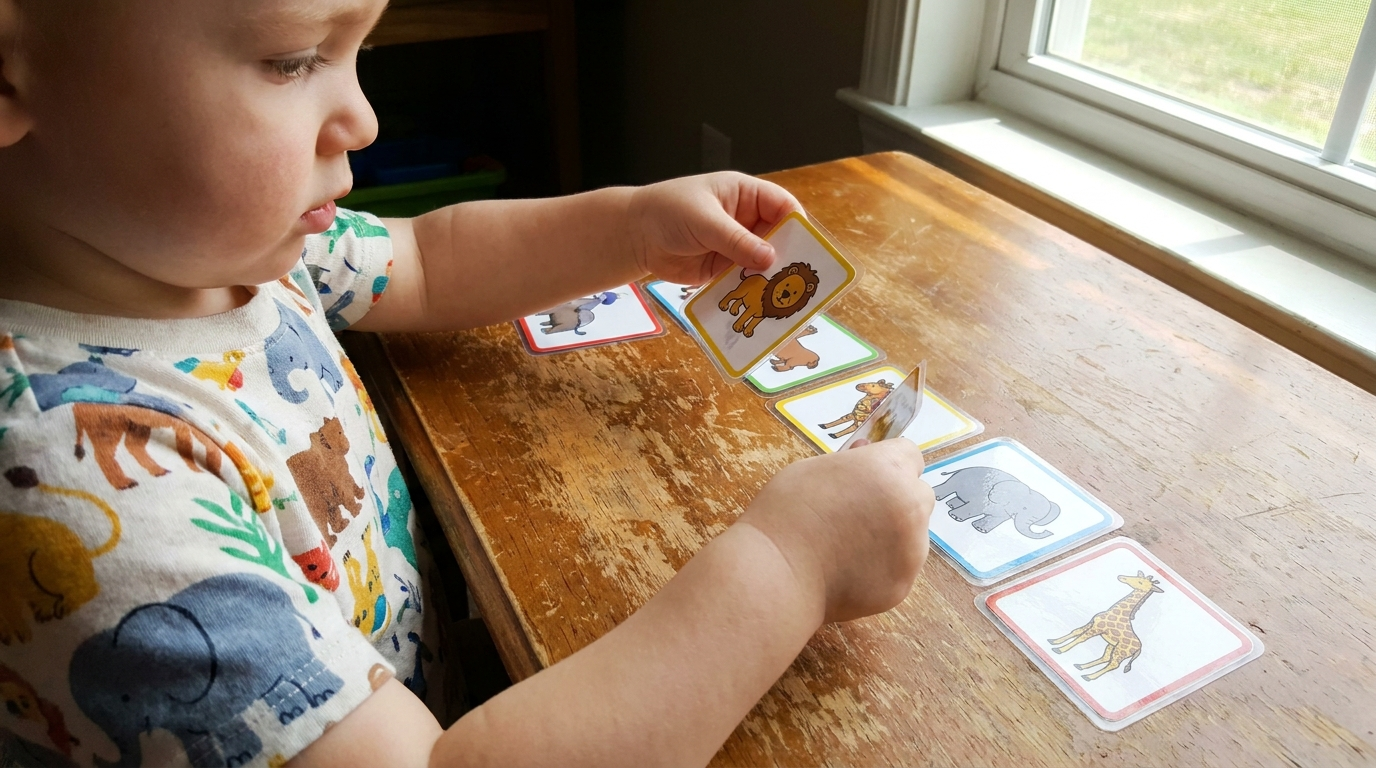
- Match the pair: matching pictures – an animal to its home or its baby.
- Sorting: putting figures into “pets” and “wild animals”.
- Animal charades: acting out an animal with your body while the others guess.
You can download animal pictures for “match the pair” games and for coloring from our animal coloring pages – just print and cut out the cards.
How to match them to age
For the youngest (2–3 years), pets and simple sounds are enough. For preschoolers (4–5), add sorting and wild animals. For older children (6–7), bring in fun facts: what they eat, where they live and what their babies are called. The same game grows with the child – you only change the level of difficulty.
How to use them in class
Animal games structure the day beautifully: “what’s that sound?” as a warm-up, sorting in pairs as teamwork, animal charades as an energetic break. Prepare one set of cards and use it in many variations for different age groups.
Frequently asked questions
From what age can children play animal games?
From about 2 – simple sounds and pets. Increase the range and difficulty with age, adding sorting and fun facts.
How do I teach the names of animals my child doesn’t know?
Introduce a few at a time, combining picture, sound and movement. Repeat them in different games – using several senses fixes names faster than pictures alone.
Are animal films enough?
They are a nice extra, but watching alone is passive learning. Active games – imitating, sorting, matching – give a child more than a screen.
Summary
Animal games teach names, classification, speech and respect – and they involve movement and all the senses. Start with pets and increase the difficulty with age. Download animal pictures for cards and coloring from our animal coloring pages.