 For Coloring Pages
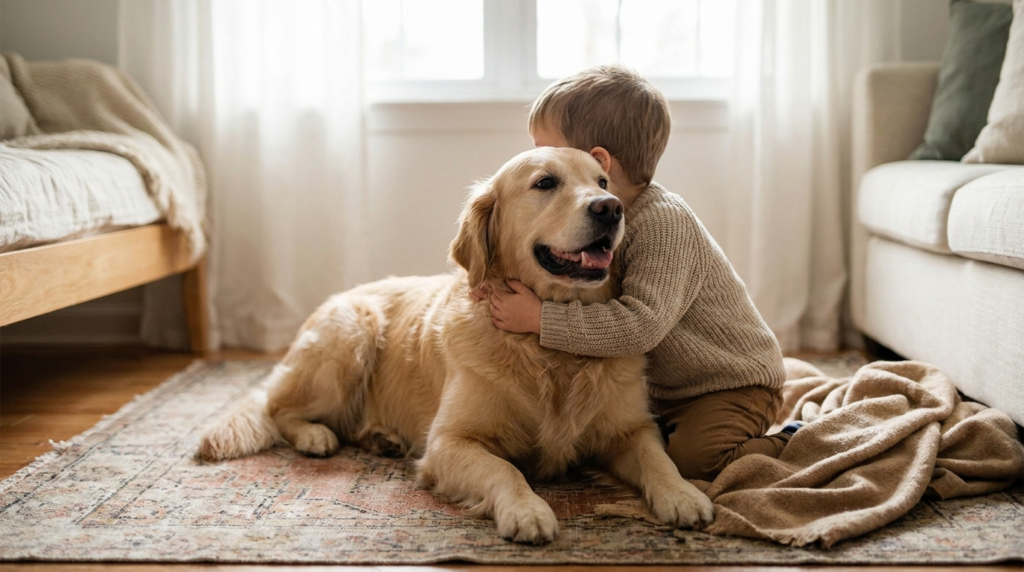
Contact with animals gives a child something that’s hard to teach with words: empathy, responsibility and calm. A dog, a cat or even watching birds outside the window teaches sensitivity to the needs of others. Below: how animals support a child’s emotional development and how to make wise use of it – even without a pet of your own.
Contents
- What does contact with animals give a child?
- How animals teach empathy and responsibility
- How to support it without a pet
- What to keep in mind
- Frequently asked questions
Key points
- Empathy: caring for an animal teaches a child to read and respect someone else’s needs.
- Responsibility: small jobs give a child a sense of agency.
- Calm: contact with an animal reduces tension and helps a child settle.
What does contact with animals give a child?
An animal can’t talk, so the child has to read its needs from its behaviour – natural empathy training. Stroking an animal and simply being near it are calming and help regulate emotions. Playing together also teaches patience and gentleness, because animals react to tone of voice and gestures. It’s a lesson in sensitivity that can’t be taught in a lecture.
How animals teach empathy and responsibility
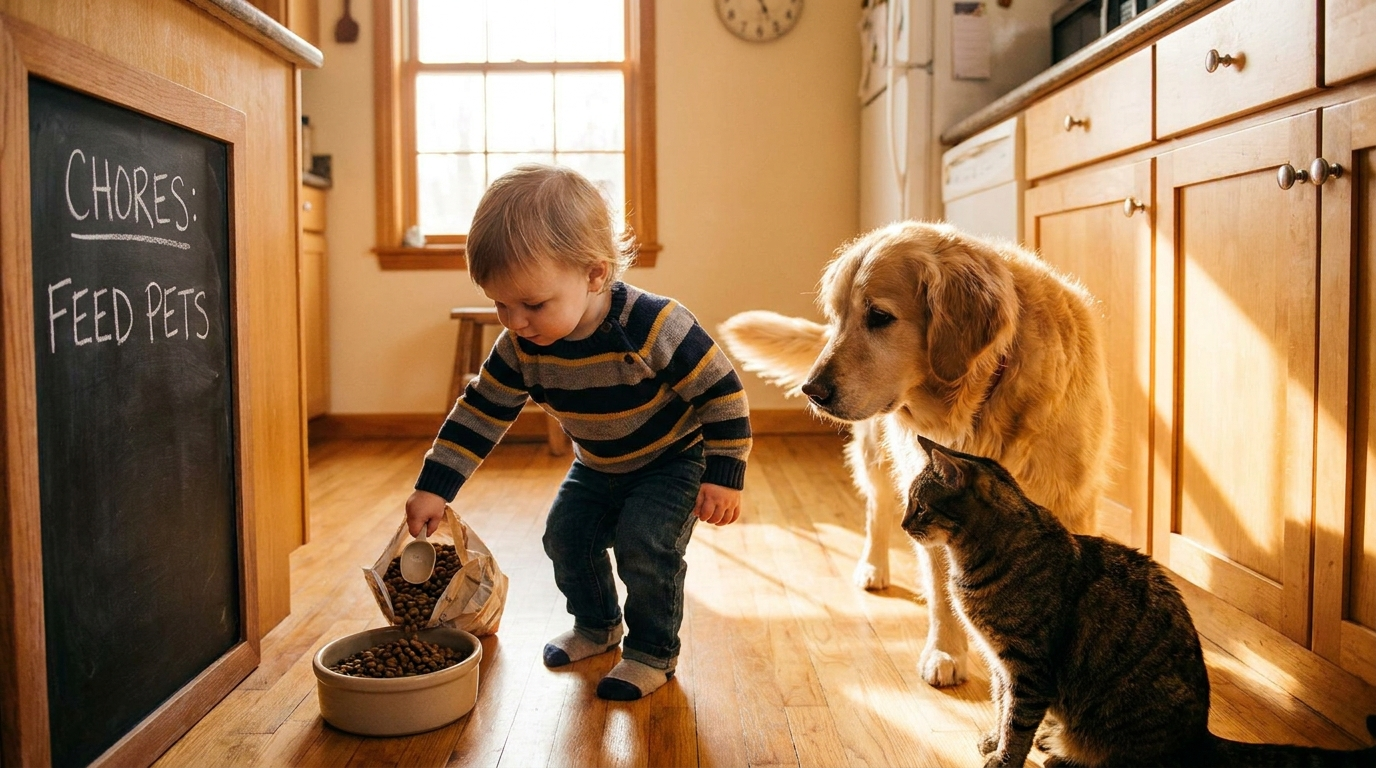
What works best is a real, small job that suits the child’s age: pouring food, filling the water bowl, a quick brush. The child sees that their actions affect the wellbeing of a living creature – which builds responsibility and a sense of agency. Asking “what do you think the dog needs right now?” directly practises seeing things from someone else’s point of view.
How to support it without a pet
You don’t need a dog at home. Watch birds and squirrels in the park, visit animals at relatives’ homes, feed the birds in winter (with suitable food). Books and games about animals help too, as do coloring pages that you color while talking about what the animal feels and likes. You’ll find pictures in our animal coloring pages.
What to keep in mind
Safety first: teach your child a gentle touch and never leave young children with animals unsupervised. Match the jobs to the child’s age – they should teach, not overwhelm. And don’t expect a child to look after a pet “on their own”: an adult is always the main carer.
Frequently asked questions
Is having a pet good for a child?
Usually yes – it teaches empathy and responsibility and helps a child calm down. What matters is that an adult stays the main carer and the child’s jobs suit their age.
From what age can a child have jobs with a pet?
Even a 3–4-year-old can pour food or fill the water bowl with an adult watching. The range of jobs gradually grows with age.
My child is afraid of animals – what should I do?
Don’t force it. Help them get used to animals step by step: from a safe distance, through watching and books, then a short, calm contact. Curiosity is a success – there’s no need to overcome fear by force.
Summary
Animals teach a child empathy, responsibility and calm – and you don’t need a pet of your own to benefit. Small jobs, observing together and talking about animals’ needs make the biggest difference. Download animal coloring pages to color and talk about together from our printable animal coloring pages.