 For Coloring Pages

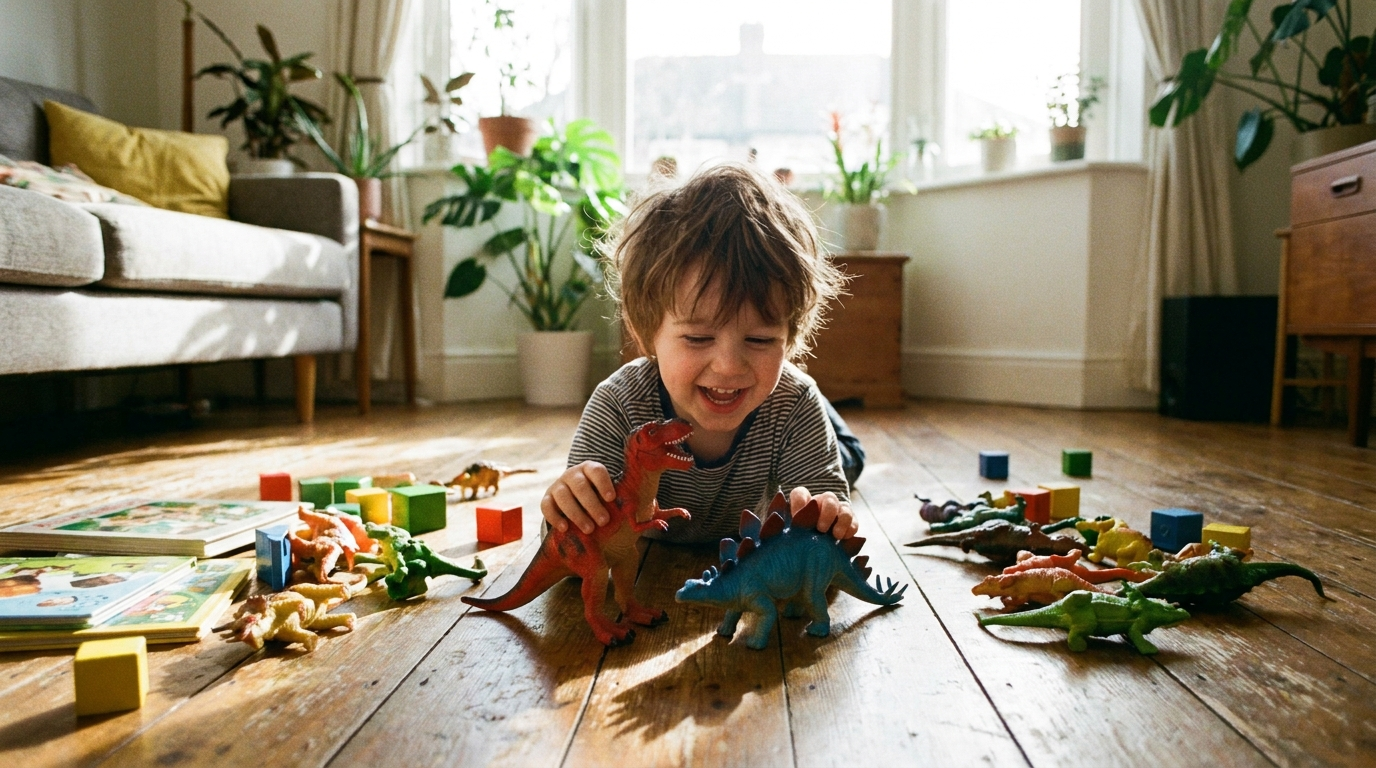
If your child knows the names of twenty dinosaurs but struggles to remember three letters – that’s no accident. A strong passion is the best fuel for learning. Dinosaurs can “smuggle in” counting, reading, science and emotions. Below: how to make wise use of a fascination with dinosaurs to support your child’s development.
Contents
- Why do children love dinosaurs?
- What does a dinosaur obsession teach?
- Ideas for learning through dinosaurs
- What to watch out for
- Frequently asked questions
Key points
- Passion is fuel: a topic a child loves makes learning everything else easier.
- “Intense interests”: a strong fascination is a normal, healthy part of child development.
- Follow your child: don’t force learning – weave it into what excites them.
Why do children love dinosaurs?
Dinosaurs are huge, dangerous and… safe – because they’re gone. A child can “tame” something powerful without any real fear, which gives a sense of control. Add the mystery (nobody has ever seen one) and loads of names to master. Psychologists talk about “intense interests” – a strong passion that develops memory, attention and self-confidence.
What does a dinosaur obsession teach?
Memorising tricky names trains memory and vocabulary. Comparing sizes and counting teeth is maths. Questions like “what did it eat?” and “where did it live?” open the door to science and geography. And talking about a favourite dinosaur develops speech and confidence. One passion drives many skills at once – you just need to follow it.
Ideas for learning through dinosaurs
- Counting dinosaurs: how many teeth or claws, how many figures fit in a row.
- Letters from names: find the first letter of “Diplodocus”, spell the name with blocks.
- Fossil dig: “bones” (pasta) hidden in sand to uncover with a paintbrush.
- Drawing and coloring: reinforces shapes, colours and species names.
Download dinosaur pictures to color together from our dinosaur coloring pages – they combine the passion with hand and attention practice.
What to watch out for
Don’t turn the passion into a chore – once dinosaurs become a “lesson”, they lose their magic. Don’t judge or quiz your child’s knowledge. And keep some variety: the passion is a great starting point, but gently show your child other topics too, so they develop broad interests.
Frequently asked questions
Is a strong fascination with one topic a problem?
No – in children it’s a normal developmental stage. An intense interest trains memory and attention. It’s worth supporting while gently broadening their horizons.
How can I teach letters and numbers through dinosaurs?
Weave them into the topic: count claws, look for letters in names, sort figures. Learning “along the way” through a passion is easier than separate exercises.
When does the fascination pass?
Usually after a few months or years the passion fades and a new one appears. That’s natural – make the most of the time while the topic still lights your child up.
Summary
A fascination with dinosaurs is a ready-made learning tool: through their passion a child practises memory, counting, letters and speech. Follow the interest, don’t turn it into a chore and weave learning into play. Download dinosaur coloring pages from our printable dinosaur coloring pages.