 For Coloring Pages
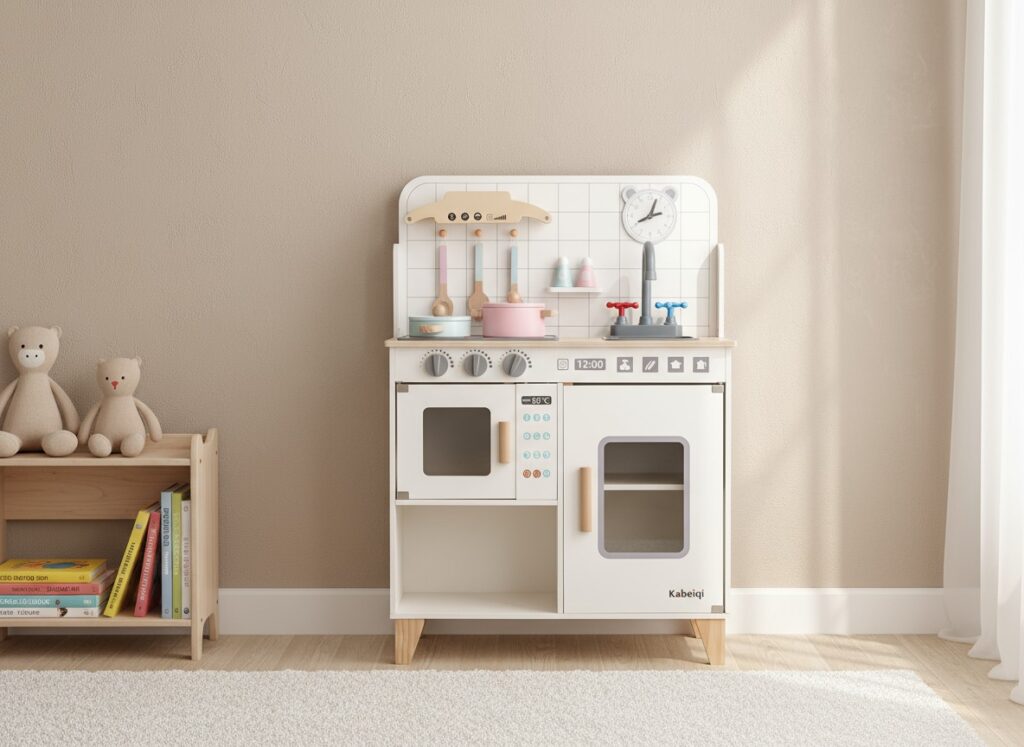
A play kitchen is one of those gifts that can stay in the house for years. Children copy adults – they “cook”, pour, stir and serve – and at the same time practise speaking, imagination and hand skills. But the choice of models is huge, and the differences often only show after unpacking. Here’s a list of things worth checking before you buy.
From what age?
Kitchen play usually starts around the age of two, when a child walks confidently and wants to do what adults do. Preschoolers also love play kitchens and set up “restaurants” for dolls and parents. The manufacturer’s recommended age is a guide: if the set has small parts, it isn’t suitable for children under three, even if the kitchen itself is big and stable.
Height and size
The countertop should be roughly at your child’s waist or elbow height, so they can stir and pour comfortably without standing on tiptoes. It’s best to measure your child and compare with the dimensions in the description. The second measurement is your home: a kitchen with many cabinets takes up quite a lot of wall space, and your child needs some room around it too.
Stability and build quality
- A wide, level base. Children lean on the counter, open doors and hold on with their whole weight, so the kitchen must not tip.
- Solid joints and hinges. Doors held by one thin hinge quickly stop closing properly.
- Smooth edges. Splinters and sharp corners rule a toy out, whatever the price.
- Finish. Paints and varnishes should be suitable for toys, and the toy should carry the appropriate safety marking (CE in Europe).
What should be included
A good play kitchen isn’t just a cabinet – it’s a place to “cook” and store things: a stove with knobs, a sink or faucet, a shelf for dishes and a hood or shelf above the counter. Check whether accessories (pots, pans, cutlery) are included or must be bought separately, and whether they’re a sensible size for small hands. A set with a few simple pieces is often better than a kitchen with dozens of tiny extras that quickly get lost.
Useful features
- Space to play standing up at the counter, with room for a cutting board and bowls.
- A sink or faucet, because pretending to wash dishes is one of the favorite activities.
- Storage: cabinets and shelves your child can reach – and tidy up – on their own.
- Knobs and doors that train precise movements.
What to watch out for during assembly
Wooden kitchens usually arrive flat-packed. Check that the description lists the assembled dimensions, that all screws are in the box and that the instructions are clear. After assembly, test stability: press lightly on the counter and check that the kitchen doesn’t wobble. Re-tightening the screws after a few weeks of play extends the toy’s life.
How to play
A play kitchen works best when an adult joins in from time to time: ordering “soup”, asking about ingredients, asking for a recipe. That’s how children learn new words, counting and the order of steps. Real items (pieces of pasta, cups, a piece of fabric as a napkin) add realism, but for children under three avoid small items that could be swallowed.
Where to look
You’ll find an overview of wooden play kitchens with descriptions, dimensions and age information at the NunuKids store (Polish); for each model you can compare dimensions and equipment, and purchased products can be returned within 30 days.