 For Coloring Pages
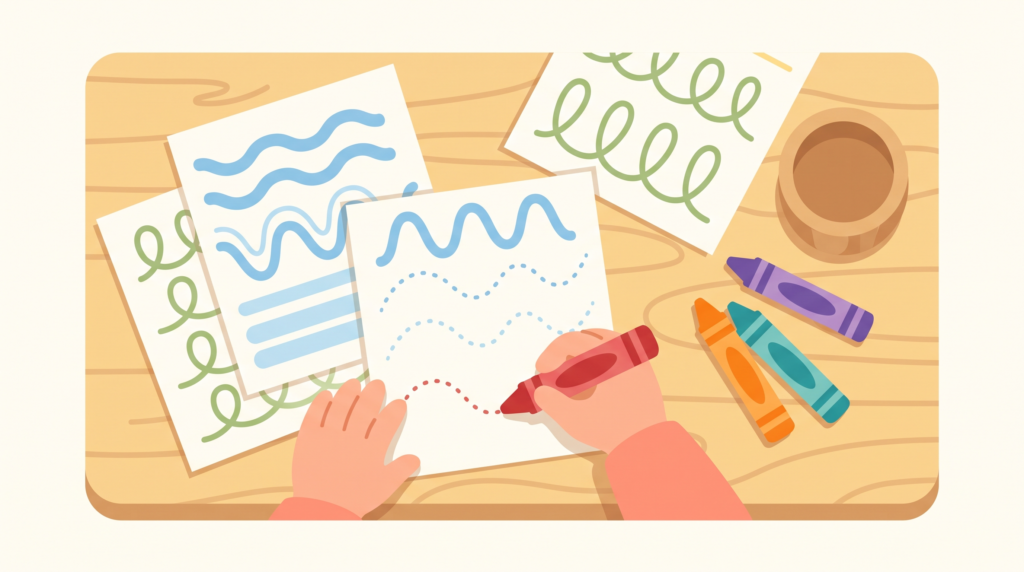
Most parents only reach for fine motor worksheets in kindergarten – which is usually two years too late. A hand gets ready for writing not through letters but through lines, patterns and coloring inside outlines, which you can start with a 3-year-old. Below you’ll find free printable fine motor worksheets organised by age, with practical tips on how to use them at home and in preschool.
Contents
- What fine motor (pre-writing) exercises are
- Printable fine motor worksheets by age
- Why fine motor skills matter for development
- How to use the worksheets – tips for parents and teachers
- Hand therapy – when extra exercises are worth it
- The most common mistakes
- FAQ
What fine motor (pre-writing) exercises are
Pre-writing fine motor skills are the hand control and hand–eye coordination that let a child deliberately draw shapes: lines, circles, patterns and eventually letters and numbers. Fine motor worksheets are tasks where the child traces, joins dots, finishes a pattern or colors inside a given area. The aim isn’t a pretty drawing but getting the hand ready for writing – a correct grip, the right pressure and smooth movement.
In practice it works like training: from big, simple movements with the whole arm (vertical and horizontal lines), through wavy and looped patterns, to precise writing on handwriting lines. That’s why worksheets are chosen by age and stage, not at random.
Printable fine motor worksheets by age
Choose the set that matches your child’s stage. Each category has ready-made PDF sheets – download, print and start practising straight away:
| Stage | What we practise | Printable sheets |
|---|---|---|
| 3-year-olds | Vertical and horizontal lines, controlled scribbles, big areas to color | Fine motor skills for 3-year-olds |
| 4-year-olds | Circles, crosses, simple patterns, coloring inside outlines | Fine motor skills for 4-year-olds |
| 5-year-olds | Wavy and looped patterns, tracing, first numbers | Pre-writing patterns · number tracing |
| 6-year-olds | Precise patterns, letter tracing, introducing handwriting lines | Fine motor skills for 6-year-olds |
| Preschool groups | Group sets, themed patterns, circle time | Printable pre-writing patterns |
| Grade 1 | Writing on lines, letters and joins, pace | Handwriting for 6-year-olds |
Looking for materials that mix learning and fun? See our educational coloring pages and letter tracing templates – they complement fine motor exercises perfectly at ages 5–6. For learning letters we have a separate guide: learning letters for 5-year-olds.
Why fine motor skills matter for development
Fine motor exercises develop small muscle control – precise movements of the hand and fingers – which is the foundation not only of writing but of independence too: doing up buttons, tying shoelaces or using cutlery. A child with a well-prepared hand learns to write faster and with less effort, because they don’t have to fight the crayon and think about the letter shape at the same time.
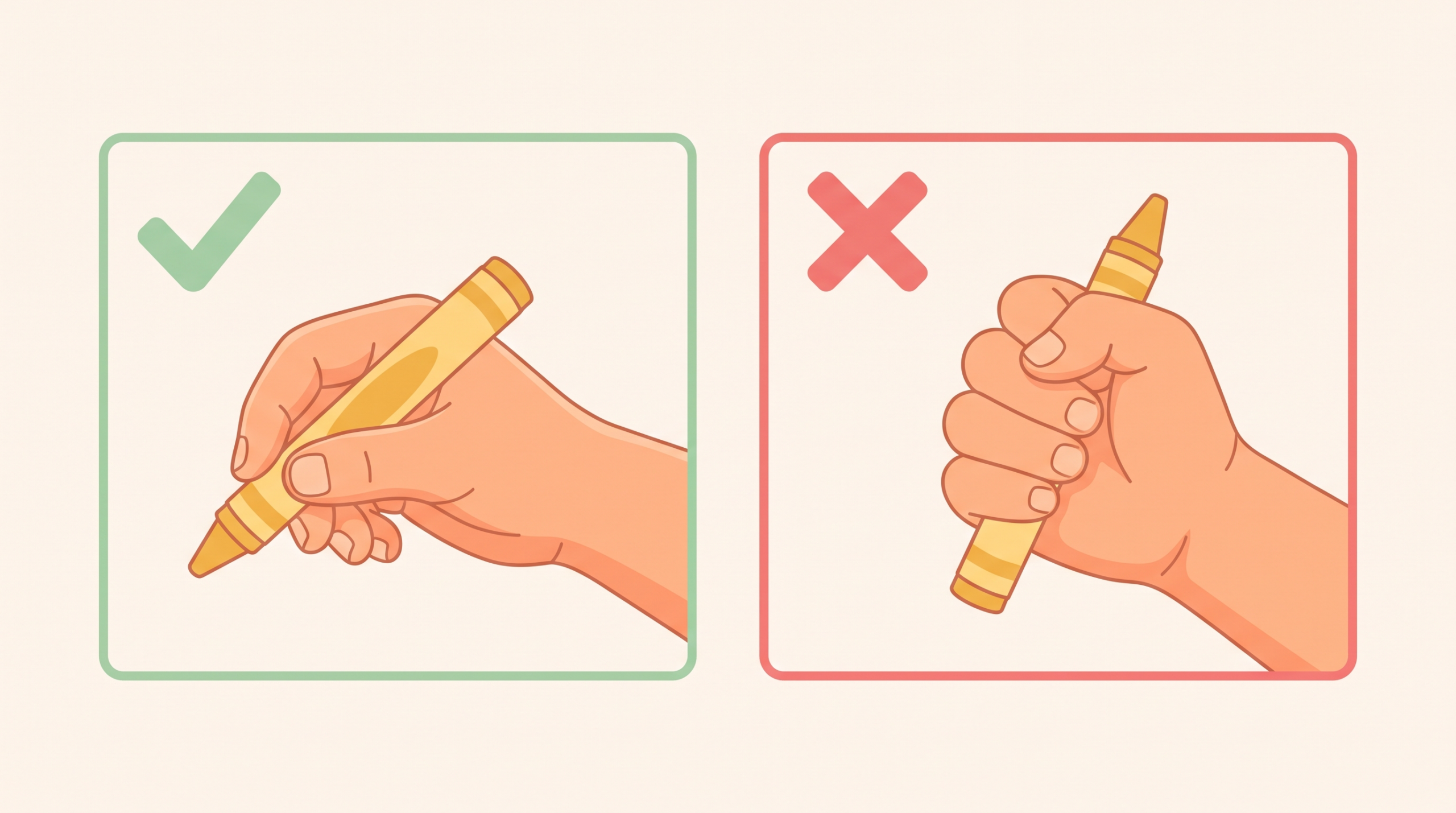
- Writing grip – regular tracing reinforces the correct tripod (pincer) grip instead of a fist grip.
- Pressure control – the child learns how much force to use so the line shows but the paper doesn’t tear.
- Hand–eye coordination – tracing trains guiding the hand with the eyes.
- Flow and direction – patterns teach drawing left to right and top to bottom, just like writing.
How to use the worksheets – tips for parents and teachers
The worksheets are only half the success – the rest is how you work with them. These rules make the biggest difference in practice:

- Short but regular. 5–10 minutes a day works better than an hour once a week. A young child loses precision when the hand gets tired.
- Start with a chunky tool. A fat wax crayon or a triangular pencil encourages the correct grip more easily than a thin pen.
- Print on thicker paper (120 gsm). Thin paper crumples under pressure and puts the child off.
- Reuse. Slip the printout into a plastic sleeve and use a dry-erase marker – the child can practise the same pattern many times without using up paper.
- Praise the process, not the result. “I can see your line is following the track” motivates more than “nice”.
- Go from easy to hard. Don’t skip stages – if a 5-year-old gets lost in wavy patterns, go back to straight lines.
In preschool, short blocks with the whole group and themed patterns (fruit, vehicles, animals) work well – children are keener to trace when the pattern “means something”.
Hand therapy – when extra exercises are worth it
Sometimes tracing alone isn’t enough, and targeted exercises from occupational therapy help. Look out for signs that the hand may need support:
- the child clearly avoids drawing and coloring, while their peers already enjoy it,
- keeps a fist grip or keeps switching hands,
- presses too hard (tears the paper) or too lightly (the line is barely visible),
- tires quickly and complains that their “hand hurts”.
In these cases, hand-strengthening exercises (squeezing play dough, threading, paper tearing) combined with simple tracing sheets help. If difficulties persist, talk to an occupational therapist – our worksheets are a support, not a substitute for a professional assessment.
The most common mistakes
- Letters too early. Introducing letter writing before the hand has mastered patterns reinforces tension and a poor grip.
- Sessions that are too long. A tired hand draws worse – shorter and more often is better.
- Correcting for the child. Guiding the child’s hand “by force” doesn’t teach – show the model on your own sheet.
- One level for everyone. Sheets for a 6-year-old given to a 4-year-old are discouraging; stick to the stage.
- Thin paper and a hard pencil. They make movement harder – start with a chunky crayon and thicker paper.
Frequently asked questions
At what age should fine motor exercises start?
The first simple worksheets (lines, big areas) are introduced around age 3. It’s not about letters then, but about movement control and the correct crayon grip.
How often should we practise fine motor skills?
Short and regular is best – 5–10 minutes a day. Frequency gives better results than long, rare sessions, because the hand doesn’t get tired.
How are fine motor skills different from learning to write?
Fine motor work prepares the hand (lines, patterns, grip, pressure), while learning to write is forming actual letters. Fine motor skills come first and are the foundation of writing.
Are printable worksheets enough?
For most children, yes – regular worksheets plus hand-strengthening games are plenty to prepare for writing. If you see persistent difficulties (avoidance, pain, a poor grip), it’s worth seeing an occupational therapist.
Start at your child’s stage: pick the sheets from the table above, print them and practise for a few minutes a day. All materials are free and ready to print.